
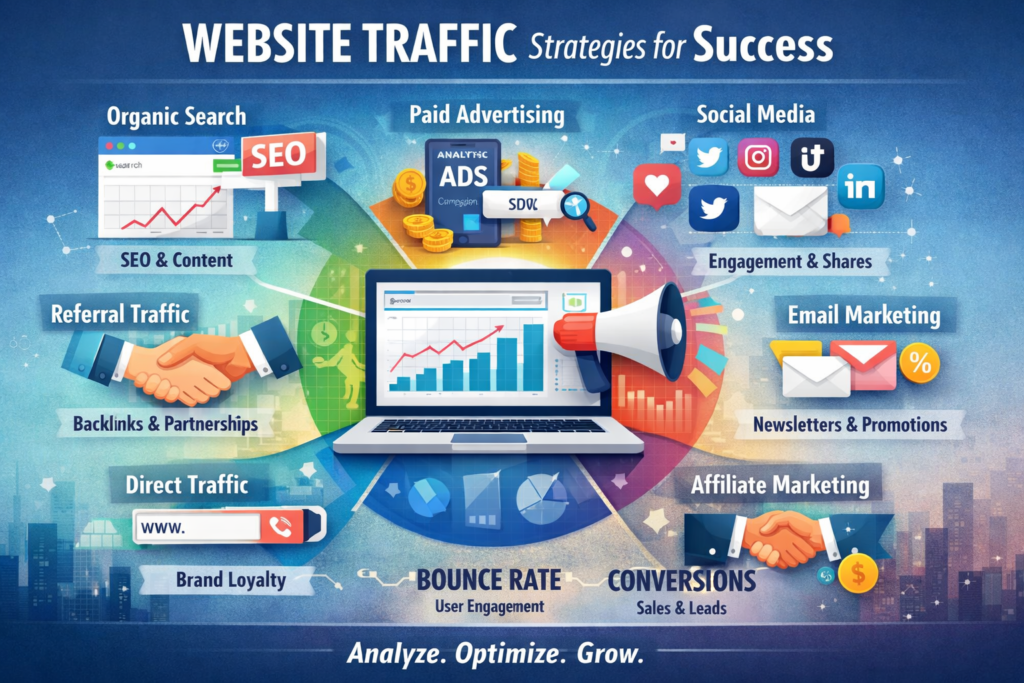
Attracting and sustaining website traffic is the lifeblood of any online business. Whether you’re a startup trying to establish an audience or an established brand aiming to scale, understanding website traffic can transform your digital presence. Many businesses struggle with inconsistent traffic, wasted ad spend, or low engagement rates because they treat traffic as a mere number rather than a comprehensive performance indicator. The truth is, traffic is more than clicks—it reflects user behavior, search visibility, and conversion potential. By analyzing traffic sources, patterns, and quality, you can unlock sustainable growth and measurable results. This guide provides actionable insights, proven strategies, and expert tips to help you drive, retain, and optimize website traffic effectively.
| Traffic Type | Description | Key Advantages | Challenges | Best Use Cases |
|---|---|---|---|---|
| Organic Search | Traffic from search engines like Google and Bing | High intent, cost-effective long-term | Requires SEO effort, slow ramp-up | Blogs, eCommerce, informational sites |
| Paid Search | Traffic from PPC campaigns | Immediate results, targetable | Costly if unmanaged, ad fatigue | Promotions, product launches |
| Direct | Users who type your URL or use bookmarks | Strong brand recognition, loyal visitors | Difficult to grow | Brand campaigns, established services |
| Social Media | Traffic from platforms like Facebook, LinkedIn, TikTok | Highly shareable, engagement opportunities | Algorithm-dependent, often low conversion | Content marketing, community building |
| Referral | Traffic from other websites linking to you | Builds credibility, relevant audiences | Requires outreach, reliant on partners | PR, partnerships, influencer campaigns |
| Visitors from email campaigns | Personalized, measurable | Spam filters, list fatigue | Newsletters, promotions, nurturing campaigns | |
| Display Ads | Traffic from banners and visual ads | Brand awareness, remarketing | Banner blindness, expensive CPM | Retargeting, awareness campaigns |
| Affiliate | Traffic from partner networks | Performance-based, scalable | Commission costs, partner quality varies | eCommerce, software, subscriptions |
Understanding Website Traffic
What Is Website Traffic?
Website traffic refers to the number of users visiting a website within a specific period. Beyond the volume, traffic encompasses sources, behaviors, and user engagement, providing insights into content relevance, marketing effectiveness, and conversion potential.
Importance of Website Traffic
Traffic drives visibility, credibility, and revenue. High-quality traffic increases conversion opportunities, enhances brand authority, and signals market demand. Without consistent traffic, even the most compelling websites risk stagnation and missed opportunities.
Metrics to Monitor
Key metrics include page views, unique visitors, session duration, bounce rate, conversion rate, and traffic sources. Monitoring these helps identify bottlenecks, optimize content, and refine marketing strategies.
Types of Website Traffic
Organic Traffic
Organic traffic comes from unpaid search results. High-ranking pages attract users actively searching for information, products, or services.
SEO Optimization Techniques
- Keyword research: Use tools to identify high-intent keywords.
- On-page SEO: Optimize titles, headers, and meta descriptions.
- Technical SEO: Improve site speed, mobile-friendliness, and crawlability.
- Content strategy: Publish authoritative and engaging content consistently.
Paid Traffic
Paid traffic is generated via advertisements, including Google Ads, social media ads, and display campaigns.
Paid Traffic Strategies
- Targeting: Use demographic, geographic, and interest-based targeting.
- A/B testing: Continuously test ad creatives and landing pages.
- Retargeting: Capture visitors who didn’t convert initially.
- Budget allocation: Focus spend on high-performing campaigns.
Direct Traffic
Direct traffic refers to users visiting your site by typing your URL or using bookmarks.
Building Direct Traffic
- Brand awareness: Run offline and online campaigns.
- Memorable URLs: Make your domain easy to recall.
- Loyalty programs: Encourage repeat visits.
- Content consistency: Regular updates keep users returning.
Referral Traffic
Referral traffic originates from other websites linking to yours. It enhances credibility and broadens reach.
Maximizing Referrals
- Guest posting: Share valuable content on relevant sites.
- Partnerships: Collaborate with industry leaders.
- Influencer campaigns: Leverage influencers to drive quality traffic.
- Link building: Acquire high-authority backlinks strategically.
Social Media Traffic
Social platforms drive traffic through shared content, ads, and community engagement.
Optimizing Social Media
- Platform selection: Focus on platforms relevant to your audience.
- Content types: Mix videos, infographics, and articles.
- Posting frequency: Maintain consistent posting schedules.
- Engagement: Respond promptly to comments and messages.
Email Traffic
Email campaigns bring subscribers to your website for promotions, newsletters, and updates.
Email Marketing Tactics
- Segmentation: Personalize emails based on interests.
- Compelling subject lines: Increase open rates.
- Call-to-action clarity: Guide readers to the website.
- Automation: Send triggered emails based on behavior.
Display and Banner Ads
Display advertising uses visual banners to attract attention and drive visits.
Display Ad Best Practices
- Targeting: Reach the right audience with contextual placement.
- Creative design: Ensure visuals are striking and concise.
- Frequency capping: Avoid overexposure to reduce ad fatigue.
- Landing pages: Align ad messaging with destination pages.
Affiliate Traffic
Affiliate marketing leverages external partners to drive traffic and conversions, often based on commission.
Building a Successful Affiliate Program
- Selective partnerships: Choose affiliates aligned with your brand.
- Clear incentives: Offer competitive commissions.
- Tracking: Implement reliable tracking systems.
- Performance monitoring: Regularly analyze affiliate results.
Measuring Traffic Quality
Bounce Rate Analysis
A high bounce rate often indicates irrelevant content, poor UX, or slow loading. Reducing bounce rate involves improving content relevance, enhancing navigation, and optimizing speed.
Session Duration
Longer sessions suggest engaged visitors. Encourage longer sessions with interlinking, multimedia content, and interactive elements.
Conversion Rate
Traffic quality is measured by how well visitors perform desired actions. Optimize landing pages, CTAs, and forms to improve conversion rates.
Traffic Source Evaluation
Understanding which channels produce high-quality traffic enables better resource allocation and marketing ROI.
Advanced Traffic Generation Strategies
Content Marketing
High-quality content attracts organic traffic, builds authority, and drives engagement.
Types of Content
- Blog articles
- Videos and tutorials
- Infographics
- Ebooks and whitepapers
- Case studies
Search Engine Optimization (SEO)
SEO ensures that your website ranks for relevant search queries.
Advanced SEO Techniques
- Long-tail keyword targeting
- Schema markup and structured data
- Backlink acquisition from authority sites
- Mobile-first indexing
Paid Advertising Campaigns
Strategic paid campaigns can rapidly scale traffic and support conversions.
PPC Optimization
- Keyword bidding strategies
- Ad copy experimentation
- Quality score improvement
- Conversion tracking and retargeting
Social Media Strategy
Social traffic can be amplified through organic posting and paid campaigns.
Social Growth Tactics
- Engaging visual storytelling
- Collaborations with influencers
- Community building and engagement
- Hashtag and trend utilization
Email Marketing Campaigns
Email remains one of the highest ROI traffic sources.
Email Optimization
- Dynamic content personalization
- Segmented mailing lists
- Triggered workflows
- Analytics-driven improvements
Referral and Partnership Traffic
Leveraging authoritative websites increases credibility and reach.
Partnership Approaches
- Strategic co-marketing campaigns
- Joint webinars and events
- High-quality guest posts
- Sponsored content on reputable platforms
Technical Optimization
Website performance affects both user experience and SEO.
Performance Enhancements
- Reduce page load times
- Implement CDN and caching
- Mobile optimization
- HTTPS security compliance
Local Traffic Strategies
For businesses targeting local markets, local SEO and location-based marketing are crucial.
Local Optimization Techniques
- Google Business Profile optimization
- Local citations and directory listings
- Geo-targeted content
- Localized promotions
Expert Tips and Pro Strategies
- Focus on quality over quantity: Target audiences that are most likely to convert.
- Diversify traffic sources: Avoid dependency on a single channel.
- Leverage analytics tools: Google Analytics, Hotjar, and SEMrush provide actionable insights.
- Optimize for mobile: Over 60% of traffic is mobile; slow or unresponsive sites lose users.
- A/B test continuously: Test landing pages, headlines, and CTAs to maximize conversions.
- Retargeting campaigns: Recapture visitors who leave without converting.
- Content repurposing: Turn blog posts into videos, infographics, and social snippets.
- Strategic partnerships: Collaborate with brands and influencers for mutual traffic growth.
- Keep up with trends: Algorithm updates, platform changes, and user behavior shifts affect traffic.
- Monitor competitor traffic: Identify gaps and opportunities using competitor analysis tools.
Frequently Asked Questions
What is the difference between traffic quantity and quality?
Quantity measures total visits, while quality measures engagement and conversion potential. High traffic volume is valuable only if users are relevant and engage with your content.
How long does it take to increase organic traffic?
SEO improvements typically take 3–6 months to show significant results, depending on competition, content quality, and site authority.
Which traffic source is most cost-effective?
Organic search and email marketing often provide the best long-term ROI, though initial investments in SEO and list building are required.
Can social media traffic convert effectively?
Yes, especially if content aligns with audience intent and landing pages are optimized. Social traffic tends to be top-of-funnel but can be nurtured into conversions.
How do I track website traffic accurately?
Use analytics platforms like Google Analytics, Google Search Console, and heatmaps to monitor source, behavior, and conversions. Set up proper tagging and goal tracking.
Should I focus on one traffic source or multiple?
Diversification reduces risk and enhances growth potential. Relying solely on one source can expose your business to algorithm changes or market shifts.
How can I reduce bounce rate?
Improve page speed, ensure mobile optimization, provide engaging content, include internal links, and align landing page expectations with traffic sources.
What role does content play in traffic generation?
Content is the foundation of organic traffic, social sharing, and authority building. High-quality content attracts visitors, encourages engagement, and supports conversions.
How important is mobile traffic optimization?
Extremely. Mobile-friendly design improves UX, boosts SEO rankings, and increases conversion rates, given that most users browse on mobile devices.
Can paid ads replace organic traffic?
Paid ads provide immediate results but require ongoing investment. Organic traffic builds sustainable growth and credibility that ads alone cannot replicate.
Conclusion
Website traffic is not merely a metric but the pulse of digital business health. Understanding the nuances of traffic types, sources, and quality allows marketers to create informed strategies that drive growth, engagement, and conversions. Sustainable traffic growth relies on a balanced approach: combining organic SEO, paid campaigns, social engagement, referral partnerships, and email marketing while continuously analyzing performance. By leveraging advanced techniques, optimizing user experience, and remaining adaptive to digital trends, businesses can transform their website from a static online presence into a dynamic engine for growth, revenue, and brand authority. Consistent focus on both quantity and quality ensures that every visitor counts, turning clicks into meaningful interactions and long-term customer relationships.